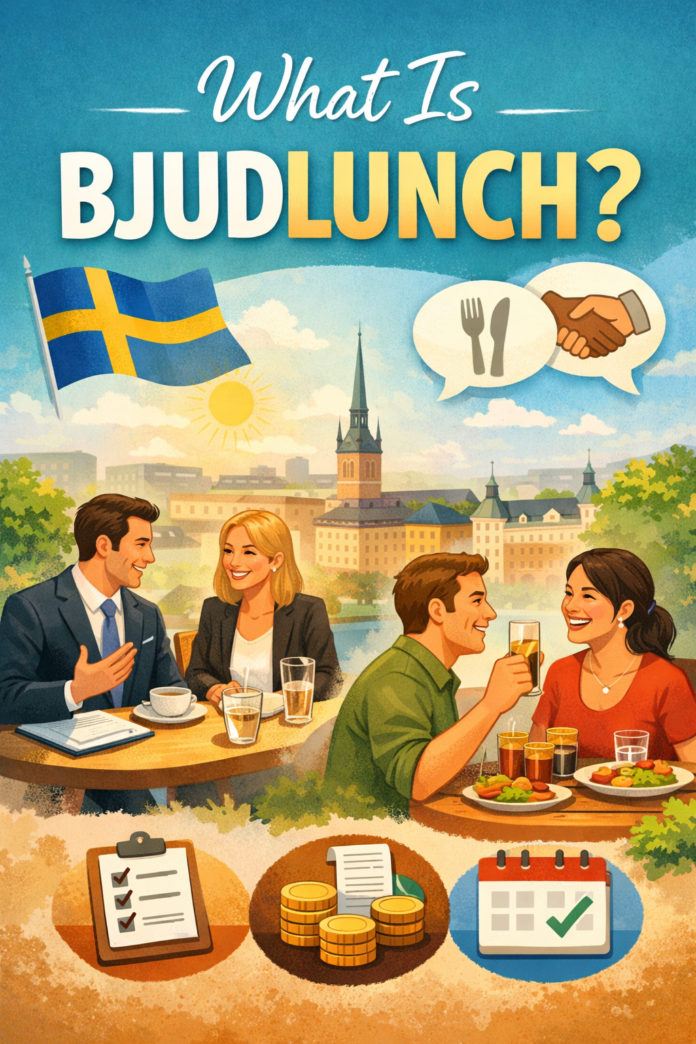


If you have ever heard the words “I’ll invite you for lunch” and spent hours mulling over what that really means in Sweden, welcome to the club.) The term bjudlunch might seem like a simple word, but it does have cultural, social, and even professional significance.
Whether you are unfamiliar with Swedish culture, corresponding with your Swedish colleagues, or looking to do business in Sweden, this guide will help you understand clearly and communicate seamlessly.
In this deep dive article, we’ll cover what bjudlunch actually is and where it comes from, how to use it in real life, when and why it matters — both personally and professionally.
We’ll also examine exemplars and pros and cons, etiquette, and where the meme of combining poems into lists might be heading. By the time you’re done, you’ll know bjudlunch as only a local can.
Understanding the Meaning of Bjudlunch
What Does Bjudlunch Literally Mean?
The term bjudlunch is coined of two Swedish words:
- Bjuda – to invite or treat
- Lunch – lunch
So, in essence, bjudlunch is “to invite someone for lunch and pay.” It’s not just about eating together; it’s the offering and covering of the cost.
But the significance goes beyond mere food.
The Simple Definition of Bjudlunch
In ordinary language, bjudlunch is when a person invites another person (or persons) to have lunch and treats them out of kindness, professionalism, or gratitude.
This could happen:
- Between friends
- Between coworkers
- Between the employer and the employee
- Between business partners
The point is that the invitee foots the bill.
Lunch Past Lunch: Bjudlunch Brings More Than a Meal
A Cultural Act, Not Just Food
The Swedish society has equality and fairness as something they appreciate. That’s why meals tend to be divided 50-50. Receiving a bjudlunch is something special, and it’s one of those efforts in international friendship that makes the industry community here stellar, and there´s always enough room for you.
It can signal:
- Gratitude
- Celebration
- Relationship building
- Professional respect
It isn’t “everybody pays for themselves” casual lunch either, but rather something akin to a host-guest dynamic in which the costs are passed down through the generations.
An Anecdote to Get the Hang of It
Imagine this scenario:
Anna lent her colleagueErik a hand on a really challenging project recently. In appreciation, she says, “Let me take you out to lunch tomorrow.” They eat at a restaurant, have an easy dinner conversation and when the check comes, Anna doesn’t hesitate to pay.
That lunch wasn’t just food. This was a bjudlunch — a small way of showing “I appreciate you” in action.
Common Situations Where Bjudlunch Happens
Bjudlunch at Work
The workplace is the most common site for a bjudlunch.
Examples:
- A manager takes a team member to lunch after successfully deploying a project.
- A corporation entertains a business guest for lunch
- A more experienced colleague takes advantage of his junior mentee.
At workno You open doors for trust here and a connection without feeling it may be too formal.
Bjudlunch Between Friends
Bjudlunch is also offered by friends, particularly when:
- Celebrating a birthday
- Thanking someone for help
- Making up after a misunderstanding
Here we’re talking informal, chatty, real-people style – not stilted and formal.
Family and Personal Occasions
Within families, it is common to:
- Welcome guests
- Celebrate milestones
- Spend quality time together
It’s not unusual for the host to demand and pay, even if guests offer to share.
Bjudlunch vs Regular Lunch: What’s the Difference?
Aspect Regular Lunch Bjudlunch Who pays Everyone pays their own One person pays Purpose Eating Relationship-building Tone Casual Thoughtful or intentional Expectation Neutral Gratitude or hosting
This is the point where bjudlunch has an affective and social value.
The Etiquette of Bjudlunch
Who Pays and When?
It is a simple rule: the invitee pays.
Say, “I’ll invite you to lunch,” and expect to pick up the tab. It’s awkward to back out or split the bill after the fact.
If the Guest Wants to Pay?
In Swedish traditions, guests tend to offer politely to share expenses. But the host almost always refuses, and pays anyway.
This polite Ping-Pong is normal and just good manners.
Saying Thank You Matters
“Thank you” can go a long way once the bjudlunch, the no-sugar-added dessert, concludes. It is normal in the workplace to respond with a brief note or email of appreciation.
Is Bjudlunch Common in Business?
Yes, But With Boundaries
In the business segment bjudlunch is popular, specifically in:
- Networking
- Client meetings
- Job interviews
- Team bonding
But in practice, companies may have rules about spending limits and reporting.
Is Bjudlunch Tax-Deductible?
Bjudlunch often times business-related expenses, which are therefore partly deductible depending on tax rules locally.
Companies usually require:
- Receipts
- Clear business purpose
- Reasonable cost
For personal lunches, it’s a free-for-all when it comes to the tax code.
- Benefits of Bjudlunch
- Strengthens Relationships
A meal is always a more casual setting to share with someone. “There’s a warmth, there’s a generosity that is added when one guy extends the bjudlunch.
Encourages Open Conversation
People are more open to speaking over a meal. A lot of the good ideas, feedback and decisions flow naturally in lunch.
Shows Appreciation Without Words
A lunch invitation may speak louder than a lengthy speech:
- “Thank you”
- “I value you”
- “Let’s connect”
- Builds Trust in Professional Settings
Privates and colleagues are more at ease after breaking bread. Which is, after all, the big payoff of bjudlunch.
Potential Downsides of Bjudlunch
Cost Can Add Up
It can get costly with frequent bjudlunch invitations, particularly if you live in a place where dining out is more expensive.
Social Pressure
Some users may not like being treated, and feel uncomfortable with it, specially if they are advocates of equal sharing.
Misunderstandings
Without knowing the expectations, guests can become self-conscious about who should pay. Clear communication avoids this issue.
Real-World Use Cases of Bjudlunch
Case 1: Job Interview Lunch
A company brings a candidate in to interview over lunch. The company foots the bill and you demonstrate professionalism and hospitality. This bjudlunch is a way of making the candidate feel welcomed and needed.
Case 2: Client Relationship Building
A consultant takes a long-standing client to lunch after closing the deal. The relaxed condition helps bond trust and future work more than before.
Case 3: Personal Gratitude
A neighbor helps you move. The following weekend,y ou invite them for lunch as a thank-you. Simple, personal, and meaningful.
How Bjudlunch Reflects Swedish Values?
Equality with Intentional Generosity
The second is that Sweden is a country of fairness and balance. Which is why bjudlunch is intentional, not assumed. When it does, it feels real, not contrived.
Modesty Over Luxury
A bjudlunch needn’t be fancy. Even just a basic café meal could do. Who cares about the price? What counts is the thought, right?
Modern Trends Around Bjudlunch
More Casual Settings
Instead of fancy restaurants, people want:
- Cafés
- Food halls
- Simple lunch spots
This means that bjudlunch can be laid-back and accessible.
Remote Work Alternatives
With remote work on the rise, virtual bjudlunch has arisen. Workers receive food vouchers so they can eat together online.
Focus on Experience
Conversations and comfort are now more valued than fancy menus. It’s about the experience more than the meal.
How to Make a Good Bjudlunch
- Pick a place you’ll both like
- Make sure the invitation is clear about who’s inviting and paying
- Keep the atmosphere relaxed
- Don’t overthink the menu
- Enjoy the conversation
A satisfactory bjudlunch is about link, not perfection.
When Should You Serve Bjudlunch?
There’s no fixed rule. It depends on:
- Your budget
- Your relationship
- The context
Occasional bjudlunch invitations feel special. Too many have simply become meaningless.
The Emotional Impact of Bjudlunch
You know, people will forget what you said and did, but never how you made them feel. Just a simple lunch date can do so much good. That’s what makes bjudlunch so enduring, even in the fast groove of modern life.
Conclusion: Why Bjudlunch Still Matters
So what is bjudlunch really about? It’s more than food. It’s about linking, acknowledging, and other matters of generosity. In friendship, family, or business – bjudlunch to foster moments that deepen relationships.
In a world where time is scarce and interactions are frequently hurried, taking the time to sit down for lunch with someone and picking up the tab can be an impactful gesture. Simple, human and significant -bjudlunch now stands firm in everyday life.
Frequently Asked Questions (FAQ)
What is a bjudlunch in simple terms?
Bjudlunch is inviting someone to lunch and offering to pay as an act of kindness or a professional courtesy.
Is bjudlunch exclusive to Sweden?
(The word is Swedish, but it’s an idea found all around the planet.) But its cultural significance is particularly potent in Sweden.
Who typically covers the cost of a bjudlunch?
The person who invites pays the entire check.
Is bjudlunch common at work?
Yes, particularly for a client meeting, as team-building or as a way to say thank you in the wake of a project.
Is bjudlunch always so expensive?
No. They can have simple, cheap lunches. It’s the thought, not the price.
Can a bjudlunch be declined?
Yes. It’s OK to say no if you’re uncomfortable or busy.
Is bjudlunch tax-deductible?
bjudlunch:business Depending on the developing tax legislation can some businesses connected to bjudlunch may possibly become partially deductible.
Diner Beware Bjudlunch — vs. Split the Bill: What’s the Difference?
In bjudlunch, only one pays for all. And when it comes to splitting, everyone pays their own way.
Are virtual bjudlunches a thing?
Yes. Remote Working With remote work, a company might sometimes grant you digital lunch vouchers to replicate the experience online.